CEO, Àlex, reflects on BMAT’s journey through various music technologies since their initial collaboration with Yamaha.
This is the story of a friendship that spans across decades. As much as we feel like ambassadors of discretion and etiquette, it’s about time we came out of the closet.
80’s :: Yamaha and Xavier :: Oai dekite ureshii desu
In the late 80’s, Yamaha – the undisputed leader of the digital synthesizers market with their legendary DX7 – decided to establish a digital sound research centre in California. On those very same days, Xavier Serra – a musician and biologist from Barcelona – had just obtained his PhD at CCRMA, the Center for Computer Research in Music and Acoustics at Stanford University. Xavier had developed a new sound synthesis method that had called the attention of the Japanese corporation. They invited him to join their lab.
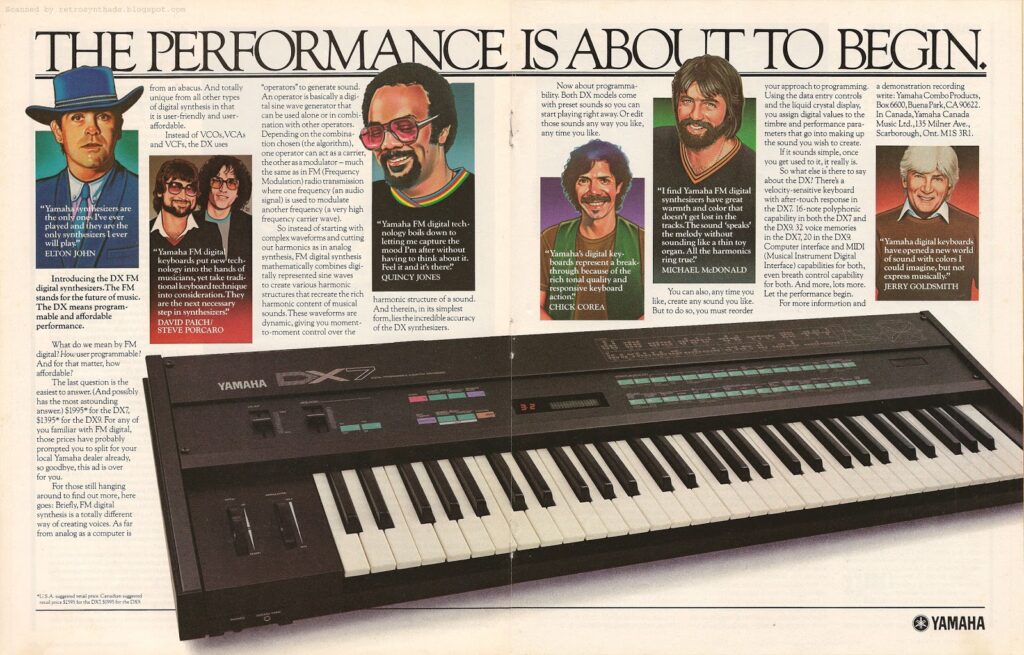
A Yamaha DX7 magazine advertisement as scanned by retrosynthads. They were right about the performance, it was totally about to begin.
Xavier Serra joined Yamaha Music Technologies in 1989 to work on digital audio processing technologies. He did so for a couple of years up until 1991, when he was given a grant from the Spanish Government to return to Barcelona. He did, and 3 years later he established the MTG, the Music Technology Group at the Universitat Pompeu Fabra.
Despite the departure, Xavier and Yamaha kept in touch.
90’s :: Yamaha and MTG :: Naki nagara chigitta shashin wo
Around 10 years later, Xavier’s former colleagues at Yamaha called him and offered a research partnership. In 1997, Yamaha signed the first research collaboration project with the MTG. At that very same time, Pedro and myself had just obtained a Bachelor’s at the ETSETB, the Engineering School at the Universitat Politècnica de Catalunya, but had barely developed anything yet, let alone caught anyone’s attention. And yet, somehow we managed to get hired at the MTG.
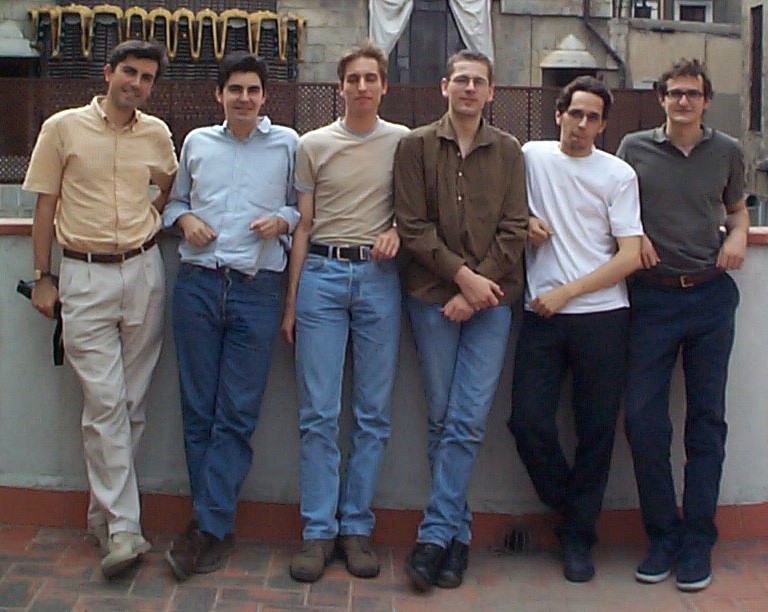
 Above, the Elvis team in casual business attire – from left to right: Xavier Serra, Pedro Cano, Mark Schiementz, Maarten de Boer, Jordi Bonada, and Àlex Loscos. Below, Hiro Kato from Yamaha signing with Xavier Serra from the MTG in 1997.
The project Pedro and I worked on with the team for the 3 years that followed was called Elvis. Elvis aimed to enable Yamaha karaoke machines to transform your voice into your idol’s. The project got prototyped but didn’t make it into the karaoke boxes. Still, every cloud, the work we did on Elvis set the foundations for MTG’s next project with Yamaha. Daisy.
Daisy was a research venture in the quest for new, high-quality singing synthesis technologies. The project was named after the first synthetic singing ever ♫, run by an IBM 7094 at Bell Labs in 1961. Unlike Elvis, Daisy didn’t leave the building, and was years later transformed into Vocaloid. The singing synthesizer became one of Yamaha’s most recent successes after releasing virtual singer Hatsune Miku with Crypton Future Media.
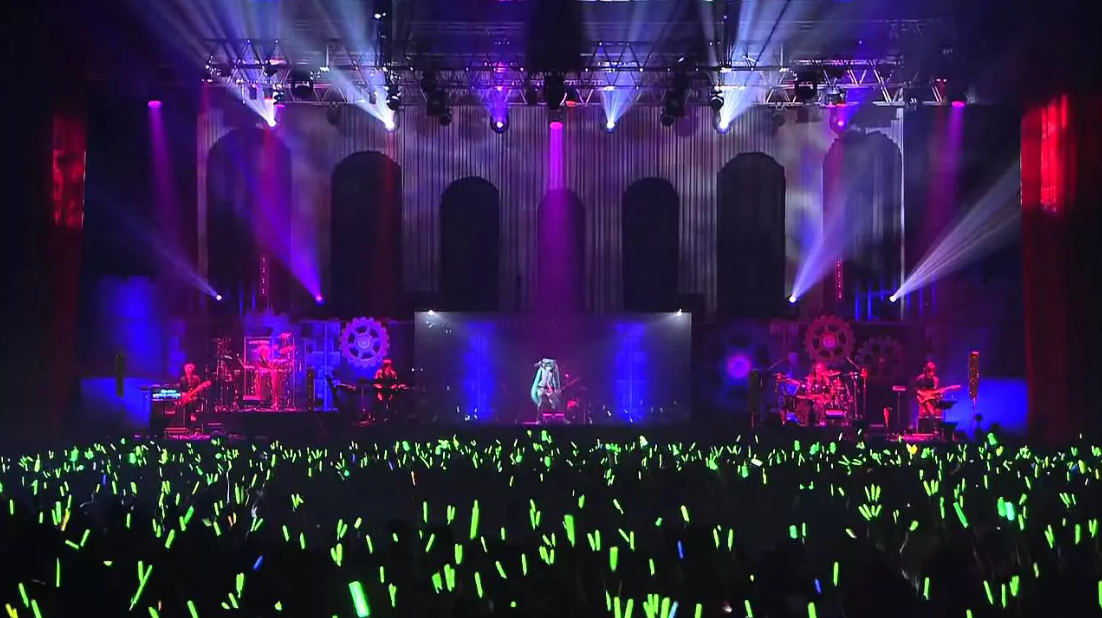
Hatsune Miku on stage, picture taken from Polygon.
00’s :: Yamaha and BMAT :: Mata au hi made aeru toki made
In the mid 00’s Yamaha was working on Bodibeat, a portable music device for runners. Bodibeat would pick and play songs from your music collection in tune with your jogging flow. In order to do so, the device needed to understand rhythm. Yamaha was looking to embed 2 beat descriptors in Bodibeat’s intelligence system – beats per minute and beat strength.
BMAT had just been founded and everybody welcomed the opportunity to channel this project through MTG’s brand new spin-off. Several months of work later, Bodibeat was released and we couldn’t stop talking about it. Yamaha became BMAT’s first reference customer and Bodibeat our flagship of applications that could be built on top of audio descriptors.
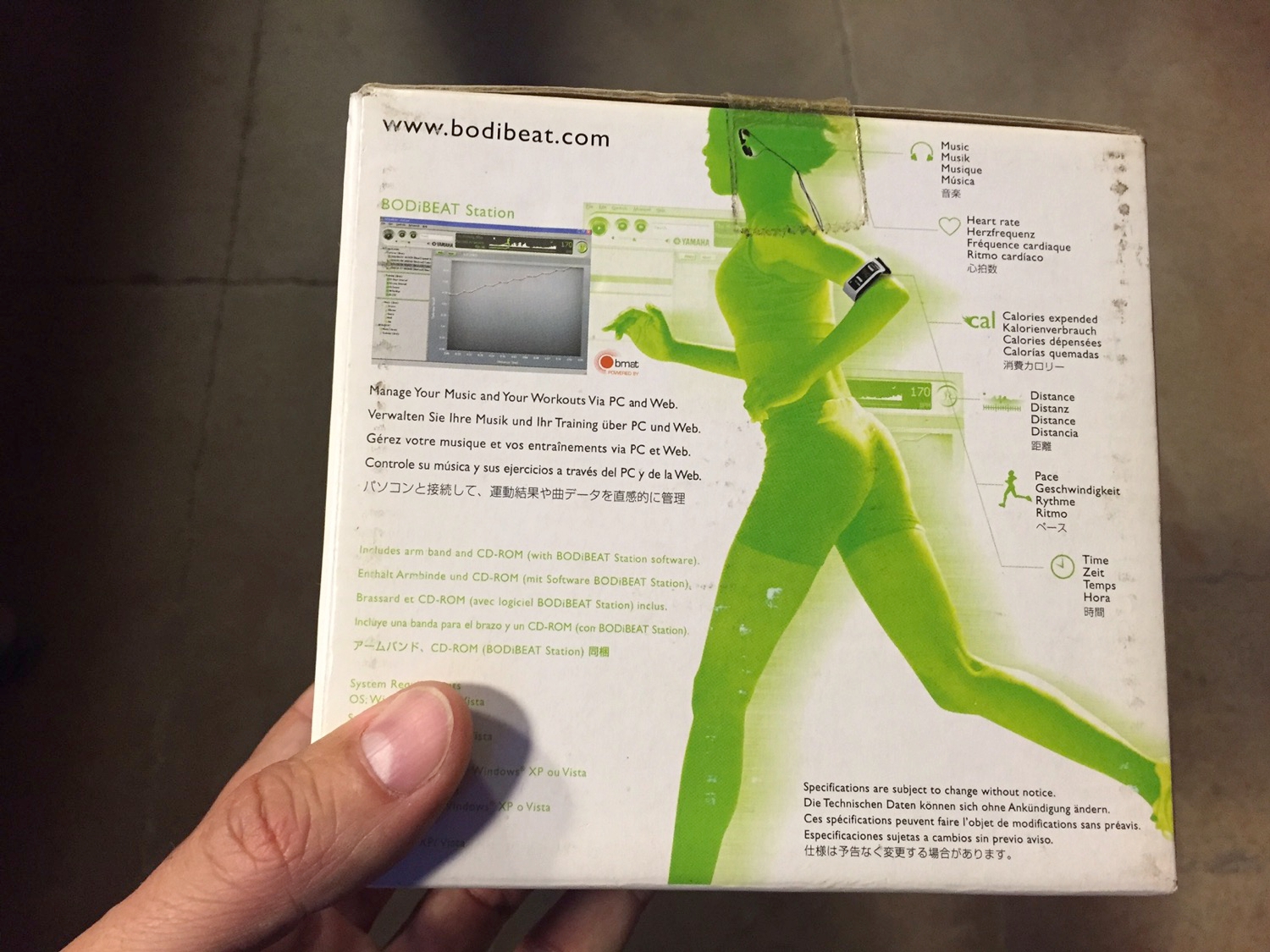
The Bodibeat box with a tiny BMAT logo.
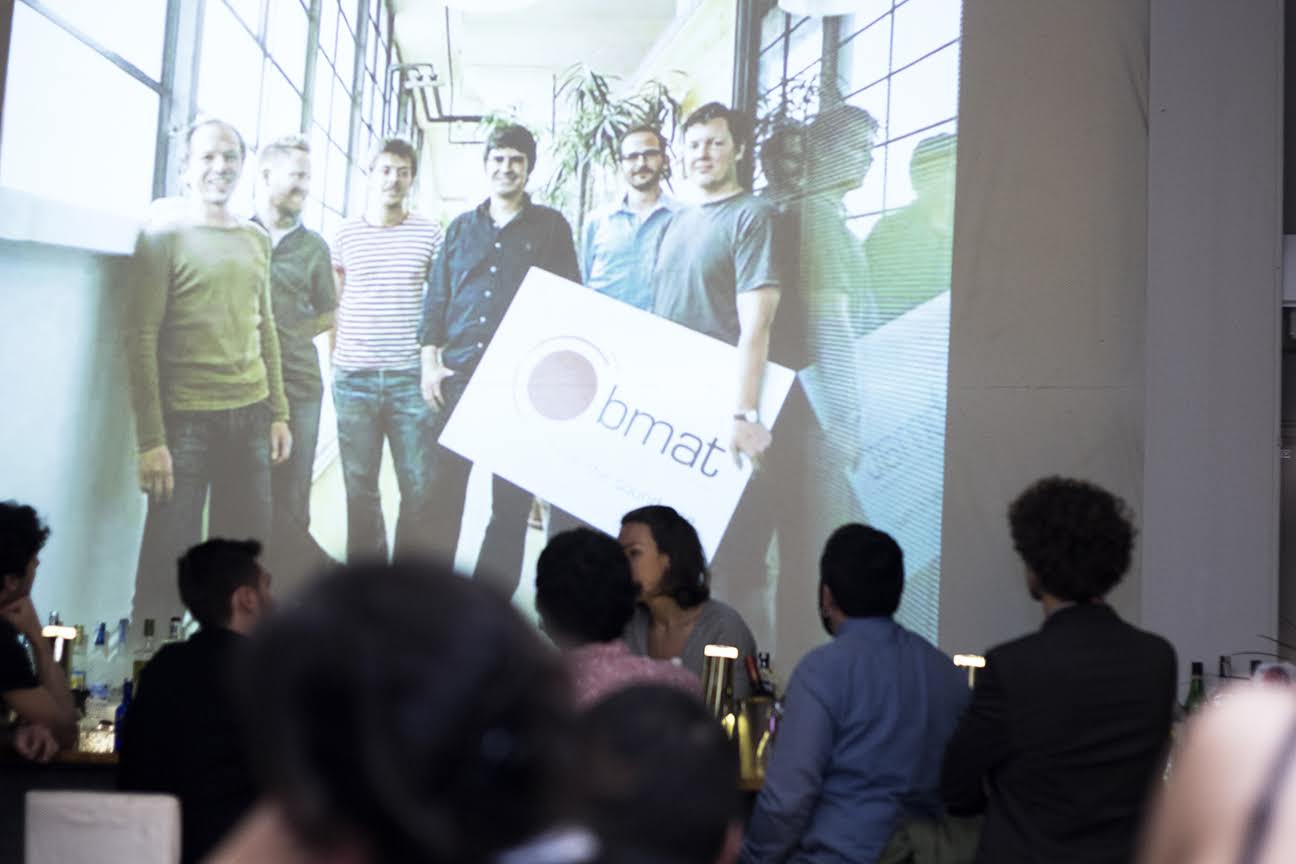
The BMAT team in 2007 with a big BMAT logo.
It’s been a while since we last saw each other but we always keep them in mind. Domo arigato, Yamaha.
Written by Àlex Rosukosu, CEO
Latest articles
October 14, 2026
10 years of SUMMUS, still off the record
5 editions, 10 years of SUMMUS, 20 years of BMAT. We think that’s not bad for something that started with a simple idea: get the right people in a room, give them something worth talk [...]
September 22, 2026
Update successfully installed: Introducing the OS for music copyright
As of today, September 22nd, 2026, we have retired the black tuxedo. It served us well, but every system needs an update eventually. BMAT now has a new website, a new look and a clear [...]
September 22, 2026
BMAT OS 26.9.22 release notes
Version: 26.9.22Release status: Successfully installedProduct: BMAT OSCategory: Operating System for music copyrightPublished by: BMAT Music Innovators Overview BMAT acts like the Operating [...]