As of today, September 22nd, 2026, we have retired the black tuxedo. It served us well, but every system needs an update eventually.
BMAT now has a new website, a new look and a clearer way to explain what we have spent the last 20 years building. The work evolved, so the narrative had some catching up to do.
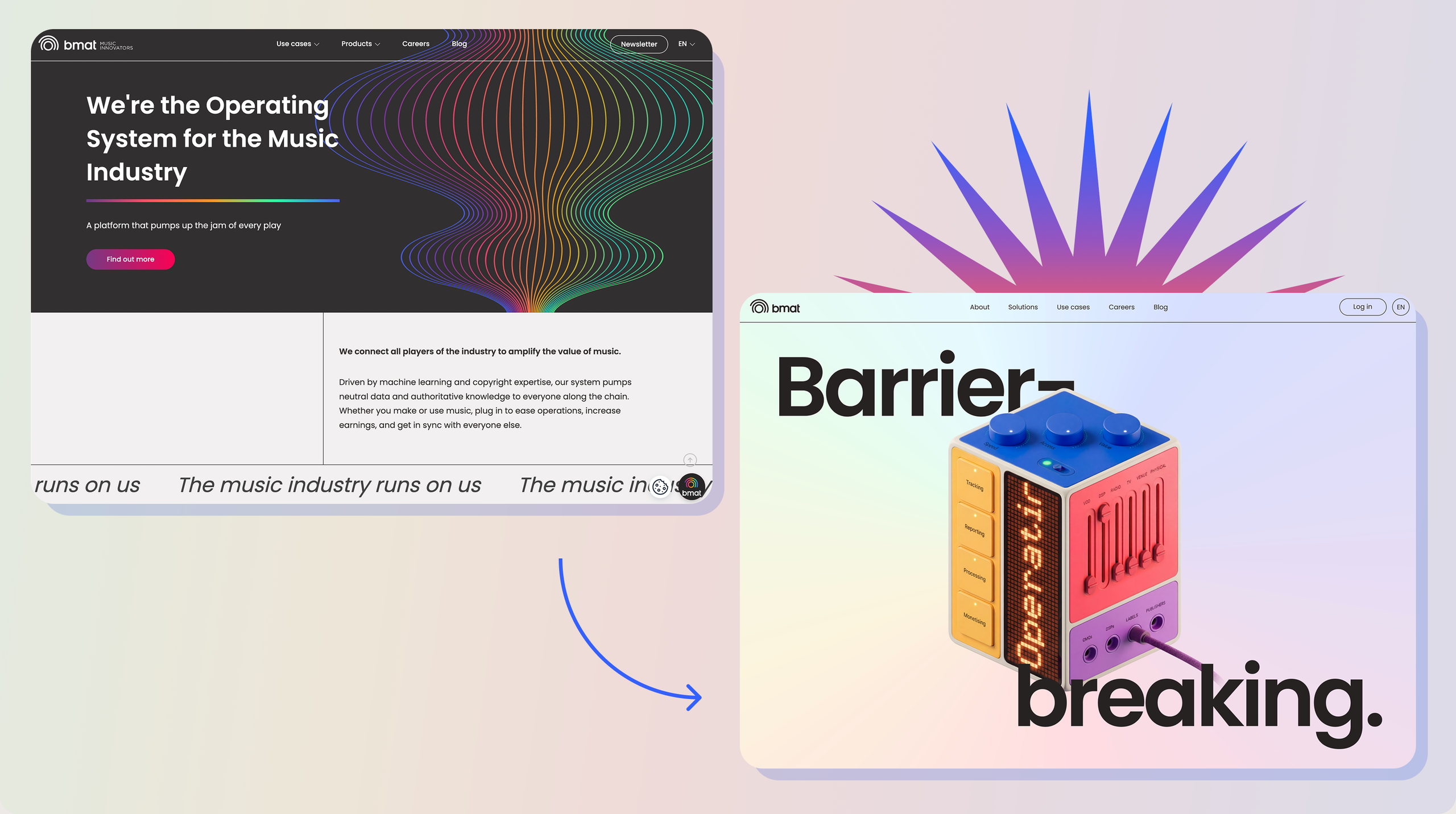
TL;DR: Same company, same people, advanced system capabilities in a new skin.
The OS release notes are available in this separate article.
A brief history of our OS obsession
BMAT stems from academia. We started as a spin-off from the Music Technology Group at UPF in Barcelona. Our early work focused on music recommendation, signal processing and the relationship between music and data.
Those roots have left their mark. We have dedicated Innovation and R&D teams, and what some would consider “an unreasonable” interest in complicated datasets. But that’s slightly beside the point.
The idea of an Operating System for music rights was first introduced to us while we were at Singularity University on a public scholarship. It stuck to our collective cerebral cortex because it described what we were building better than anything else.
Not a single product, platform or service, but the connective layer that helps the whole system stay in sync.
We still haven’t found a better way to explain it, so you’ll have to forgive the slightly grand name.
What’s an OS, anyway
We’re no better than citing Wikipedia, according to which an operating system is “difficult to define”. Off to a great start, but it gets more promising from there.
An operating system is the software that manages a computer’s resources and helps its programs, processes and users work together.
In its simplified definition, it does at least 3 useful things.
It keeps things running
An OS gives applications access to shared resources, such as processing power and memory, without letting one application bring the whole system down.
It manages complexity in the background
It hides much of the technical machinery underneath, so every program does not need to understand the hardware before it can do its job.
It supports the whole stack
An OS provides common services and a shared environment. Different applications have different purposes, but they still run through the same system.
Which, when you think about BMAT and the music industry, starts to sound quite familiar.
An OS walks into a music tech company
We’ll spare you the kernel, program execution, system interrupts, signals and memory access references. They are all OS components, but our time is probably better spent explaining how any of this relates to us.
Music data comes from many sources, in many formats and with plenty of caveats attached. Creators, labels, publishers, broadcasters, CMOs, DSPs, venues and other players all need to exchange it.
Their systems rarely speak exactly the same language. There may be common points here and there, but rarely enough to keep the whole chain moving without friction.
As a consequence, processes slow down, costs rise, and royalties become harder to get into the right pockets. In some cases, any pockets.
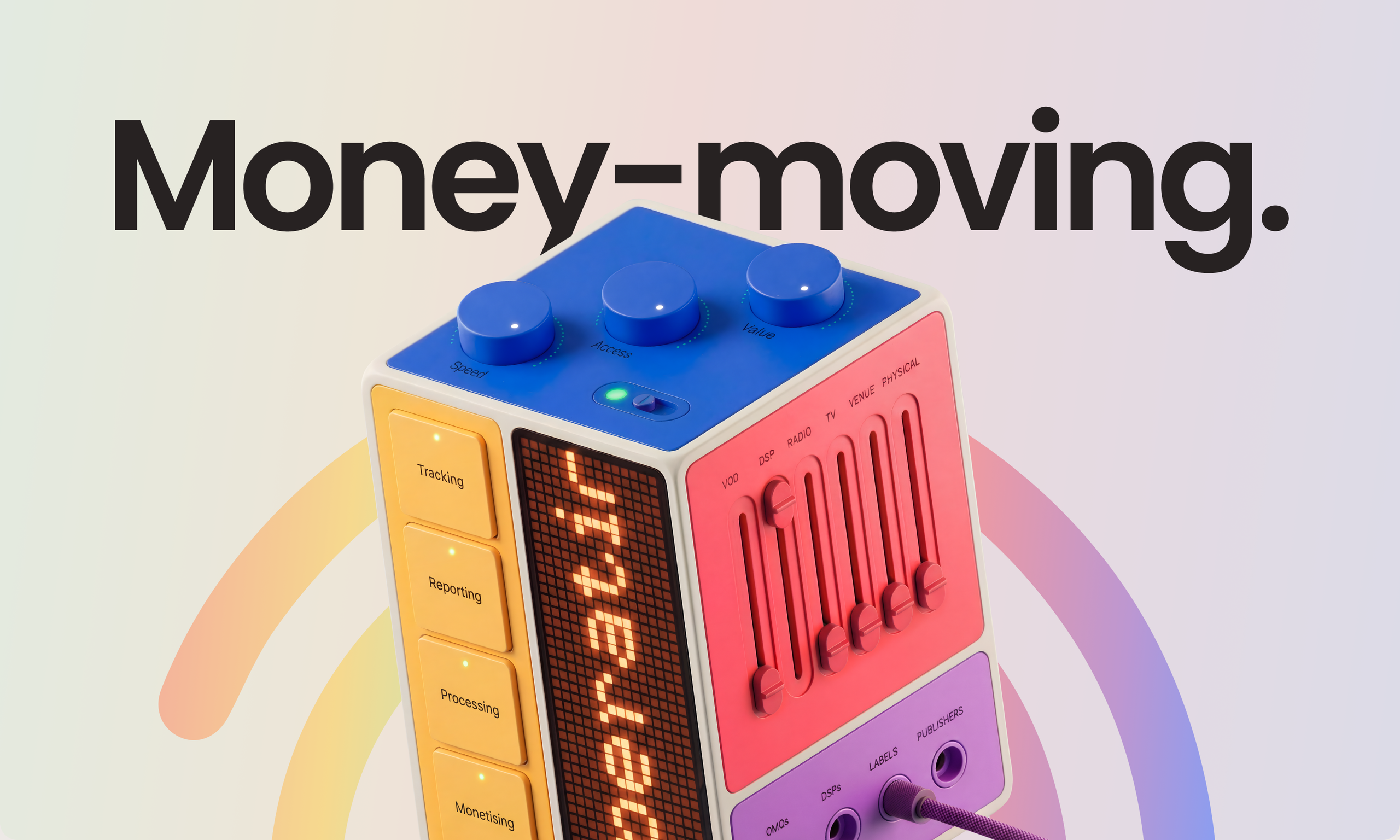
That has been our cue. We step in where those systems stop understanding each other. We translate, align and connect the data so the rest of the chain can keep moving.
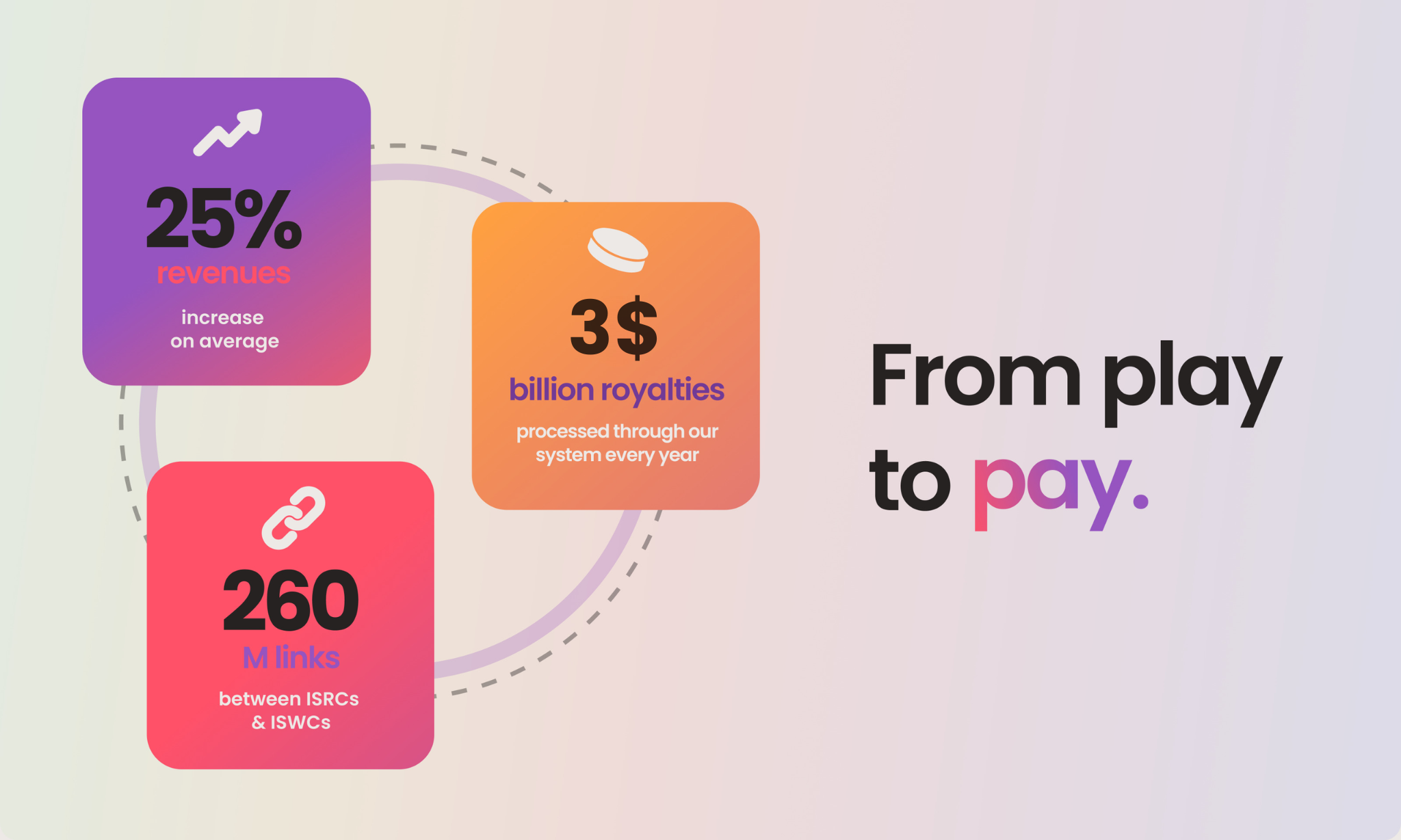
It also supports the journey from play to pay. We identify usage and connect recordings with compositions so more royalties reach the right people.
Speaking of pockets, BMAT processes more than $3B worldwide every year. Around 50% comes from DSP and VOD processing.
What we mean when we say the music rights industry “runs on us”
It’s a metaphor, really, and it comes with an asterisk. We would have called it manifesting if we were more spiritually awakened.
We know the music industry does not literally boot up BMAT every morning, not yet anyway.
What we mean is that BMAT provides a growing part of the data and processing infrastructure underneath it.
Most solutions address specific parts of the copyright lifecycle, sometimes in isolation. We’ve spent 2 decades figuring out how to link the whole chain, bringing together technology and expertise that are often kept apart.
Our shared infrastructure standardises inputs, coordinates processes and manages much of the complexity in the background.
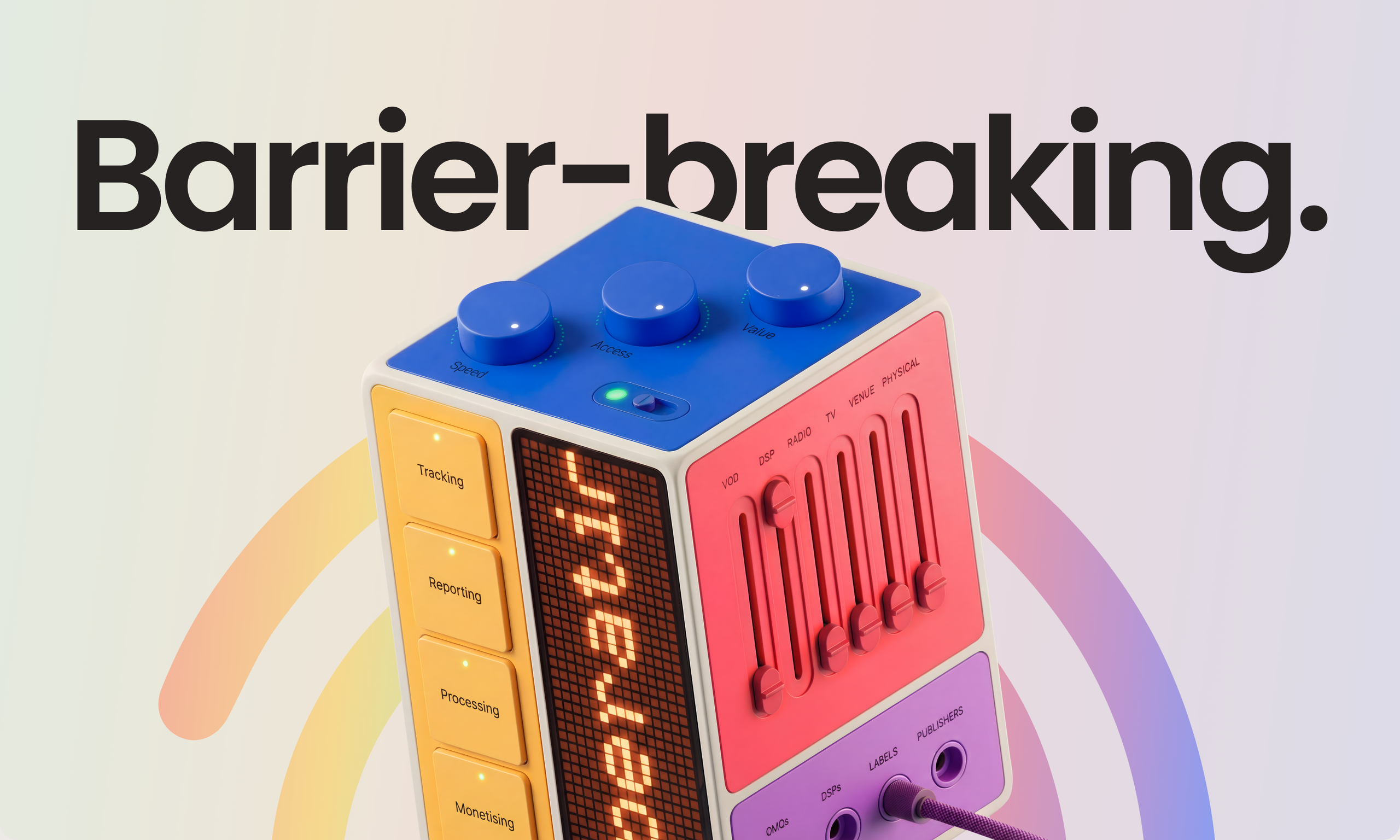
It gives organisations across the industry a clearer source of truth and access to technology they would otherwise need to build separately.
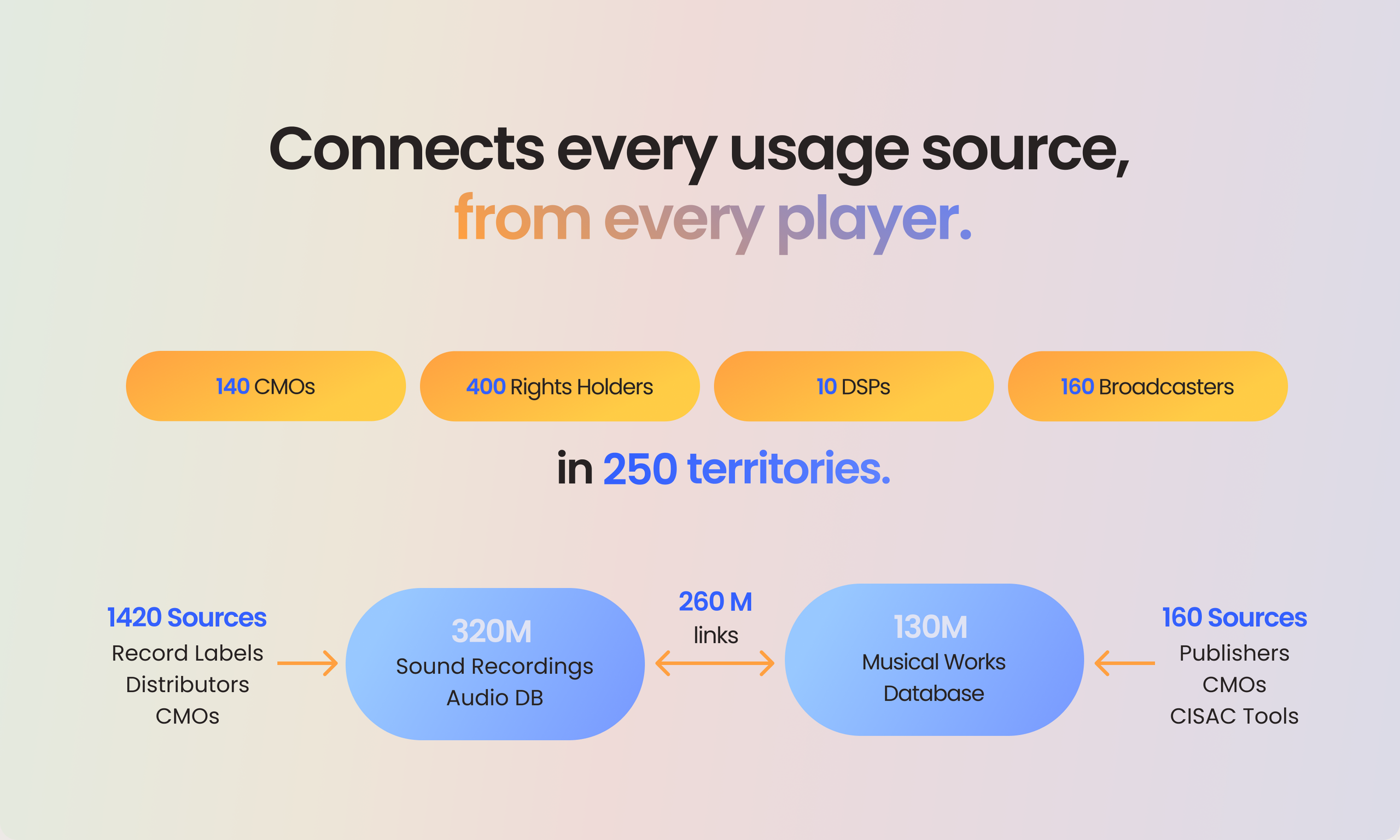
And speaking of organisations running on BMAT, our OS currently supports 140 CMOs, 400 rights holders, 10 DSPs and 160 broadcasters across 250 territories.
Behind it are databases containing 320M sound recordings and 130M musical works, connected through 260M links.
Working across the chain also shows us where information gets duplicated, delayed or lost. By now, we have a fairly good idea of how to unstick it.
We think curiosity, hard work, stubbornness, expertise and a lot of processing had something to do with getting us here.
Update successfully installed
BMAT has outgrown the way we used to describe it.
Truly, over the last 20 years, we’ve outgrown our initial scope a few times over. We started as a provider of individual services.
Today, we sit much deeper in the rights chain as a data and processing partner.
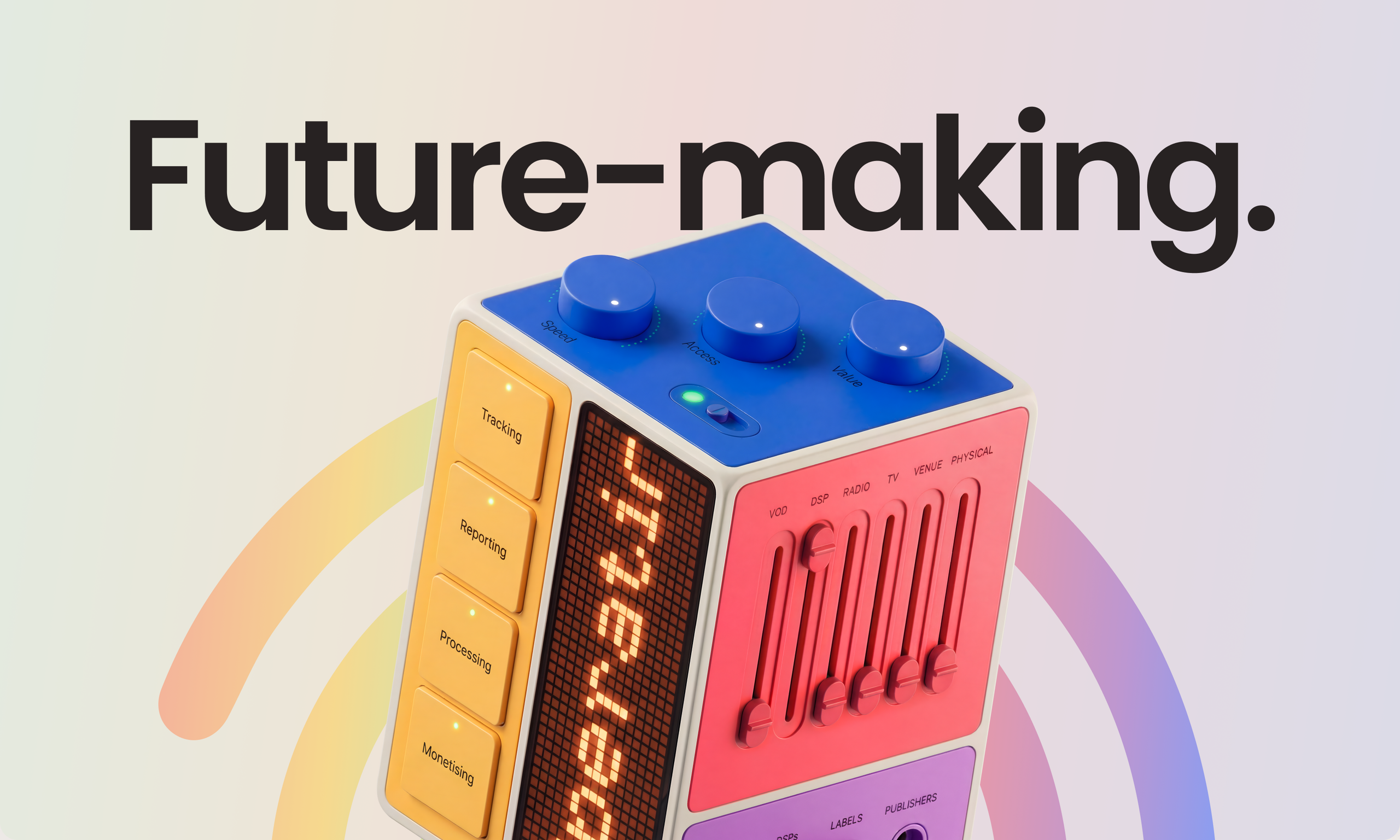
Our technology connects more players, supports more decisions and processes more of the information on which music rights depend.
Our mission is to become the shared Operating System for music rights and empower the future of music.
The OS gives that 20-year evolution a name.
It also gives the industry a clearer invitation: instead of adding another disconnected tool, plug into infrastructure designed to connect all pieces.
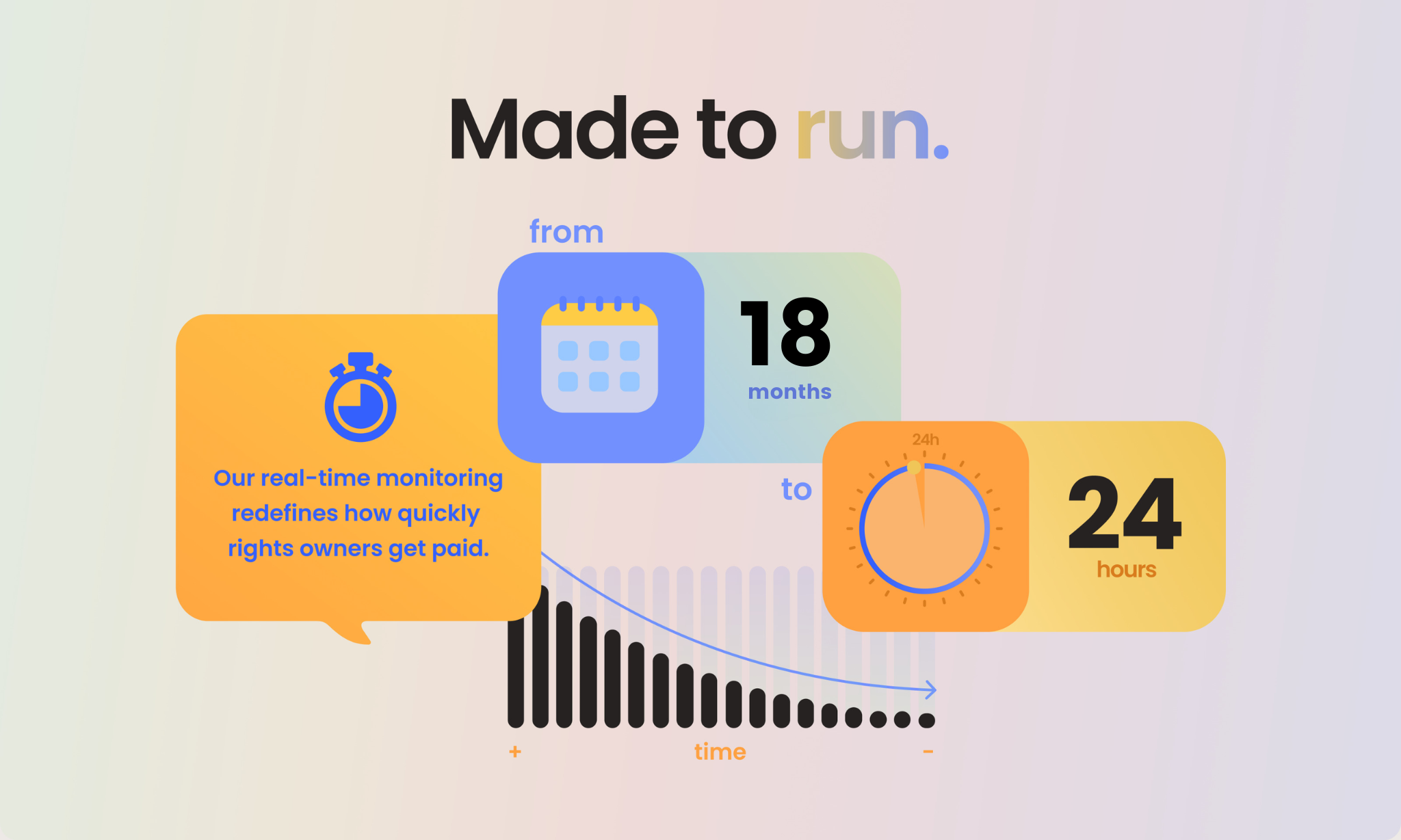
One system for all players, made to run, from play to pay.
Unchanged since version one
We love music, and we’ve spent the last 20 years building technology that empowers the people behind every song.
Our purpose has not changed. It is still to make music a better place for artists, with fairness, transparency and efficiency as the common denominators.
We will continue to put rigour, intelligence and experience behind what we build. That approach has helped us create world-class technology and earn the trust of organisations across the industry.
The scale of the industry has changed, and so has the technology. The problems have become bigger, the solutions far more complex.
The music industry will shape its own future. We’re here to support it as it evolves, building the infrastructure that helps the whole system work better together.
So now we both know what we’ve been building quietly in the background for 20 years: the Operating System for music copyright.
We finally have a name for it. And what we consider a very cool box on our brand-new website.
See how you can plug into it here.
Latest articles
September 22, 2026
BMAT OS 26.9.22 release notes
Version: 26.9.22Release status: Successfully installedProduct: BMAT OSCategory: Operating System for music copyrightPublished by: BMAT Music Innovators Overview BMAT acts like the Operating [...]
September 16, 2026
The policy of truth: A study on measuring how much AI is in a track
For 20 years, we’ve been turning our love of music into technology that helps make sense of what’s happening behind every song. And the industry keeps giving us many new things [...]
March 13, 2026
First, video killed the radio star, and now AI is going after video: A study on detecting GenAI music in broadcast audio
A new paper from the UPF-BMAT Chair on AI and Music has been accepted to ICASSP 2026, which is one of the most prestigious international conferences dedicated to the intersection of signal [...]